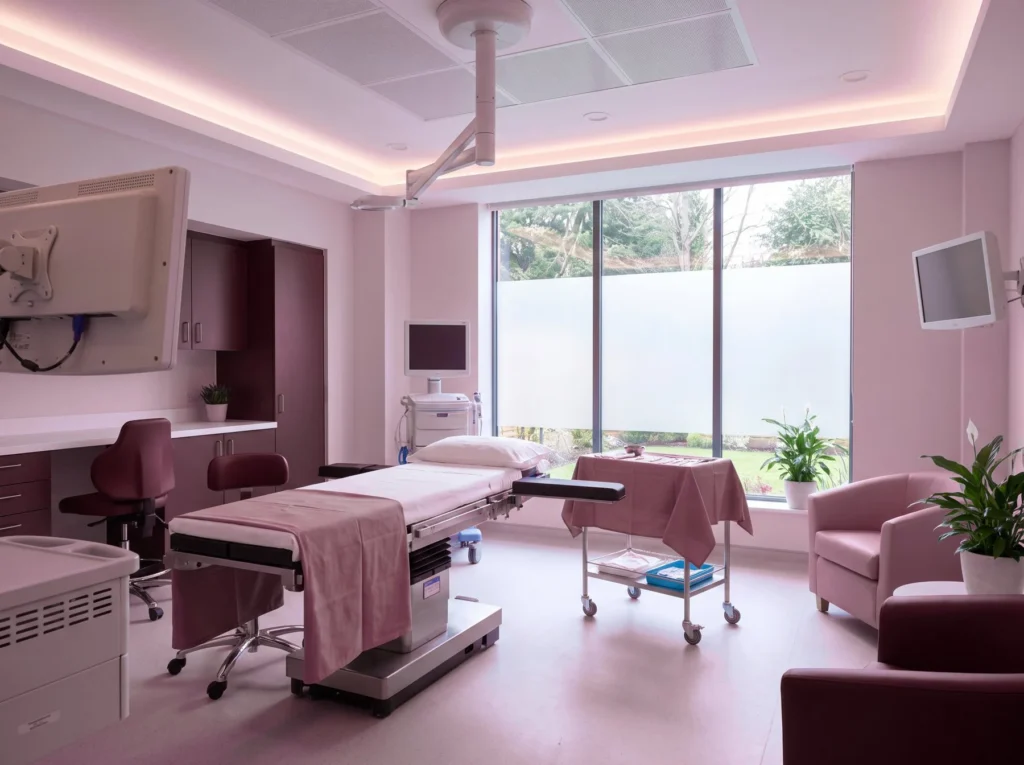
What is a hysteroscopy?
A hysteroscope is a narrow telescope with a light and camera. It passes gently through the vagina and cervix so the inside of the womb can be seen on a screen, with no cuts to the skin.
It is the most direct way to check the lining of the womb. It is often combined with an endometrial biopsy or the removal of a polyp in the same visit. Read more about heavy periods and postmenopausal bleeding.
When do symptoms need urgent help?
| Your symptom | Possible cause | What to do |
|---|---|---|
| Bleeding heavy enough to soak a pad every hour, or feeling faint | Very heavy bleeding | Call 999 or go to A&E |
| Severe pelvic pain with a high temperature | Infection | Call NHS 111 or see an urgent GP |
| Any bleeding after the menopause | Needs prompt assessment | See your GP or book within two weeks |
If you are unsure, NHS 111 can advise you day or night.
Problems hysteroscopy can help with
- Heavy periods: when the cause has not been found on a scan
- Bleeding between periods: or after sex
- Postmenopausal bleeding: to check the lining of the womb
- Polyps: which can often be removed during the test
- Small fibroids: that sit inside the womb cavity
- A lost coil: when the threads cannot be seen
Your treatment options
Hysteroscopy can be used to diagnose a problem, to treat it, or both.
Diagnostic hysteroscopy
A short look inside the womb, usually in the outpatient clinic with local anaesthetic.
Operative hysteroscopy
Polyps or small fibroids are removed with fine instruments, in clinic or as a day case.
Endometrial biopsy
A small sample of the lining is taken for the laboratory, often during the same visit.
Hysteroscopy or another test?
| Detail | Hysteroscopy | Pelvic ultrasound | Endometrial biopsy |
|---|---|---|---|
| What it shows | The inside of the womb, directly | The womb, ovaries and lining thickness | Cells from the lining |
| Where | Clinic or day case | Clinic | Clinic |
| Anaesthetic | Local, or general if preferred | None | Usually none |
Many women have an ultrasound first. Miss Bangari will recommend the simplest test that answers your question.
Why patients choose Miss Bangari
- Experience: more than 20 years in women’s health and an NHS consultant since 2017
- Clear explanations: patients describe her approach as calm, kind and thorough
- Recognised expertise: FRCOG, BSCCP-accredited colposcopist, GMC 6109237
- Choice of clinic: four locations across London and Kent
Before your hysteroscopy
- Medicines: keep taking your usual medicines unless you are told otherwise
- Food and drink: eat normally for an outpatient test; fasting instructions are given for a general anaesthetic
- Pain relief: ibuprofen or paracetamol an hour before can help
- What to bring: a list of medicines, a sanitary pad and someone to take you home after a general anaesthetic
What happens on the day
1
Welcome
Your consent and any questions
2
The test
Usually 10 to 20 minutes
3
Rest
A short rest and a drink
4
Results
Findings explained before you leave
Recovery, risks and results
Most women go home within an hour of an outpatient hysteroscopy and return to normal activities the next day. Period-like cramps and light bleeding for a few days are common.
- Common: cramping and spotting for a few days
- Uncommon: infection, treated with antibiotics
- Rare: a small tear in the wall of the womb, which usually heals on its own
Your results and follow-up plan
You will leave with a clear explanation of what was seen. Any biopsy result is sent to you, usually within one to two weeks, with a written plan and a copy to your GP if you agree.